
Case Study
Four Steps to Help You Address Compliance Requirements
An executive eBook from Cloudflare outlining a four-step architectural approach to streamlining regulatory compliance across distributed, multi-cloud, and AI-driven environments. It demonstrates how a unified connectivity cloud establishes continuous data visibility, enforces data localization, strengthens governance, and automates audit reporting. Regain control over distributed data, enforce regional sovereignty, and streamline audit readiness across cloud, AI, and hybrid environments with a unified connectivity cloud.
- Topic
- Security
- Published
- 12 Nov 2026
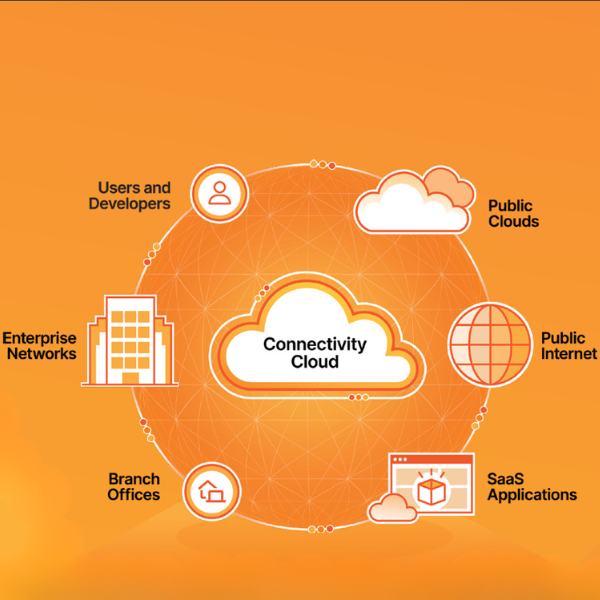
Rapid cloud adoption, generative AI deployment, and distributed work models have dissolved traditional network perimeters, making it harder for technology leaders to manage risk and regulatory compliance. While 73% of compliance practitioners expect regulatory obligations to expand and 93% of organizations are rethinking their security strategies, half of surveyed IT leaders report feeling only somewhat prepared to manage compliance and data privacy effectively. Fragmented point tools and siloed cloud domains further complicate policy enforcement and audit readiness.
This Cloudflare eBook presents a structured, four-step framework to regain control using a unified connectivity cloud. By converging security and networking into a single control plane, organizations can track sensitive data across every state, enforce regional data sovereignty and localization rules, apply consistent data loss prevention (DLP) policies, and capture comprehensive audit logs, including generative AI interactions, to meet standards such as GDPR, PCI DSS, DORA, NIS2, and ISO/IEC 27001.
Key Highlights:
Escalating Regulatory Pressures: 73% of compliance practitioners anticipate increased regulatory requirements, prompting 93% of organizations to re-evaluate their security strategies.
Enterprise Preparedness Gap: Half (50%) of surveyed IT leaders feel only somewhat prepared for regulatory compliance management, while 52% report gaps in policy management and 48% in data privacy.
Operational Strain on Security Teams: 44% of cybersecurity professionals struggle to comply with evolving legislation due to administrative complexity and time constraints.
Rise of Continuous AI Monitoring: Industry projections indicate 40% of organizations will adopt AI-enabled risk and compliance tools to detect internal and third-party anomalies in real time.
End-to-End Data Visibility (Step 1): Combines CASB, Secure Web Gateway (SWG), Zero Trust Network Access (ZTNA), and Remote Browser Isolation (RBI) to monitor data at rest, in transit, and in use.
Granular Data Localization & Sovereignty (Step 2): Enables organizations to choose specific data center jurisdictions for TLS key storage, TLS termination, and customer metadata boundaries to satisfy mandates like GDPR.
Securing APIs and AI Workloads: Applies default-deny ZTNA, device posture checks, and predefined DLP profiles to govern how APIs and AI tools access sensitive corporate data.
Unified Multi-Cloud Governance (Step 3): Enforces consistent security policies across web, SaaS, and private applications from a single control plane while automatically redacting PII from logs.
Four Core Governance Technologies: Integrates cloud Object Storage, Encryption, Logging, and strict Access Control to maintain data accuracy, privacy, and jurisdictional compliance.
Automated Audit Trails & GenAI Logging (Step 4): Captures detailed interaction logs, including generative AI prompts, responses, errors, and timestamps, to streamline internal and third-party audits.
Multi-Framework Alignment: Maps technical security controls directly to major global frameworks, including NIST 800-53, NIST 800-207 (Zero Trust), ISO/IEC 27001:2022, SOC 2 Type II, FedRAMP, PCI DSS, DORA, and NIS2.